Responsible Chemical Management
What RSL/MRSL Awareness Means for Textile Factories
RSL MRSL awareness helps textile factories connect chemical input control with documentation readiness, audit confidence, buyer communication, and long-term supplier trust.
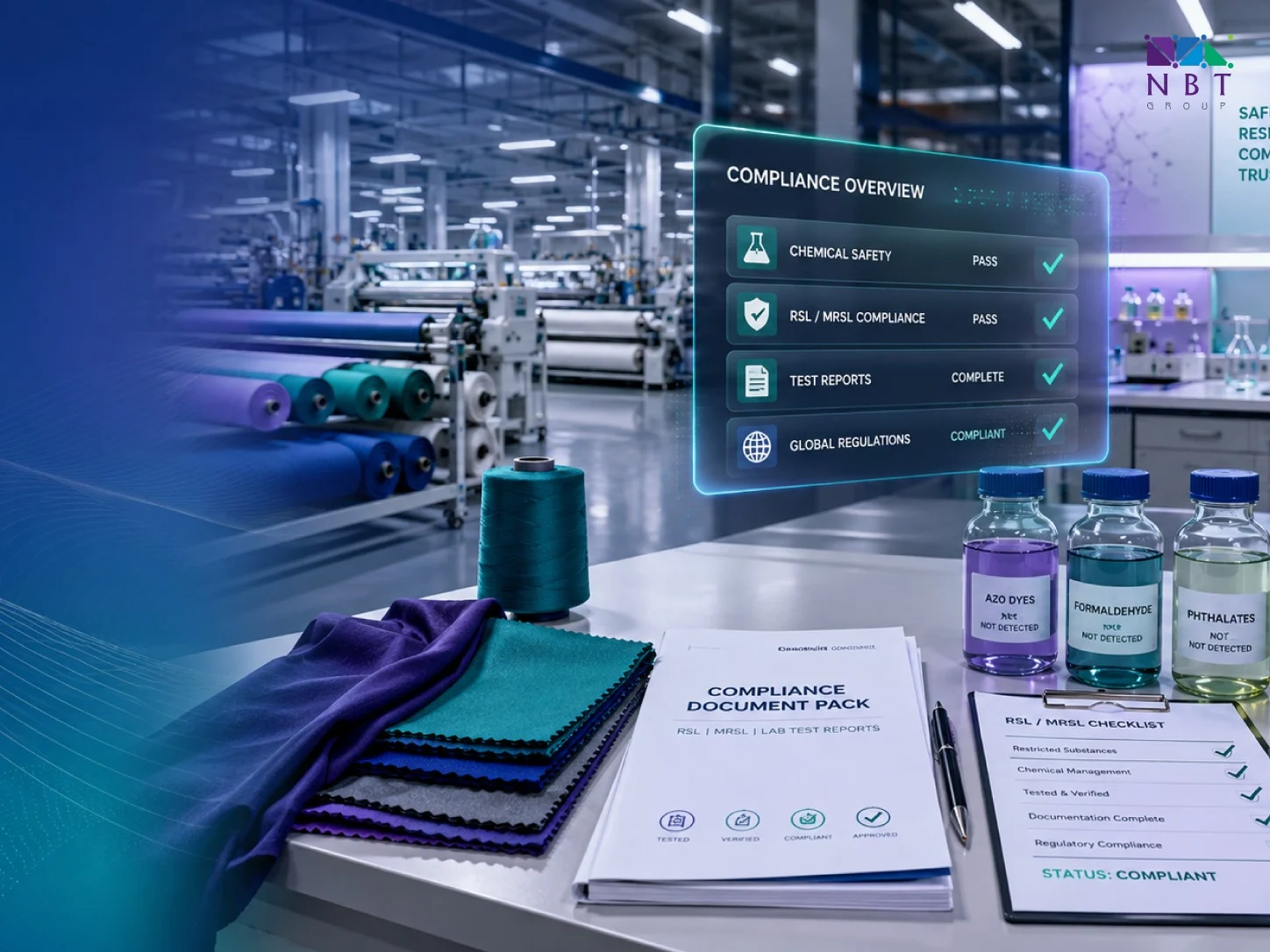
Compliance Starts Before the Audit
In textile manufacturing, compliance is often discussed when an audit is near, a buyer asks for documents, or a shipment faces a requirement. In reality, compliance starts much earlier. It starts when a factory chooses its chemicals, organizes its documentation, and works with suppliers who understand responsible chemical management.
For many factories, RSL and MRSL can sound like technical terms reserved for compliance teams. But these two concepts influence real business conversations: buyer confidence, audit readiness, production responsibility, and long-term supplier trust.
This article explains RSL MRSL awareness in practical language for textile factories and shows why chemical supplier selection is now part of modern business credibility.
1. RSL and MRSL in Simple Language
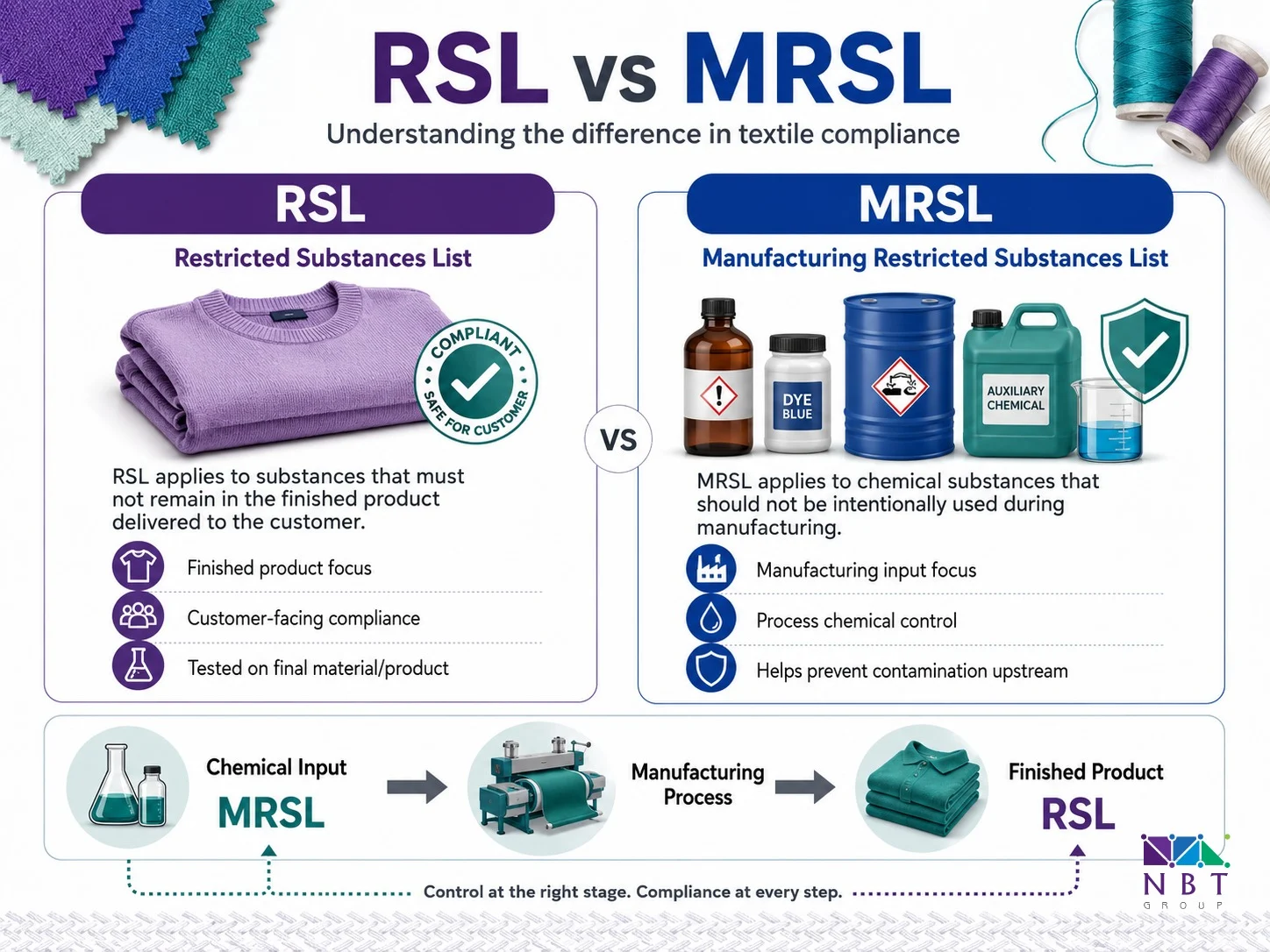
RSL means Restricted Substances List. It is mainly connected with the finished product: garments, fabrics, shoes, accessories, or other textile products that eventually reach a buyer or consumer.
MRSL means Manufacturing Restricted Substances List. It focuses on the chemicals used during manufacturing, before the final product is made.
| Term | Main Focus | Factory Meaning |
|---|---|---|
| RSL | Final product | What restricted substances should not be present in the finished textile product beyond accepted limits. |
| MRSL | Manufacturing input | What restricted substances should not be intentionally used in chemical formulations during production. |
A factory that understands both can manage buyer conversations with more confidence because it can connect finished-product responsibility with the chemistry used inside production.
2. Why RSL MRSL Awareness Is a Business Issue
A factory may have strong production capacity, skilled technical people, and disciplined delivery. But when buyers ask about chemical safety, product documentation, or supplier records, the factory also needs a clear and organized answer.
This is where RSL/MRSL awareness becomes a business issue. It helps factories avoid confusion, prepare better for buyer questions, and select chemical partners who understand the responsibility behind textile manufacturing.
For factory owners and management teams, this is not only about passing a checklist. It is about protecting buyer relationships, reducing uncertainty, and showing that the factory has a mature approach to chemical input management.
3. Chemical Supplier Choice Affects Buyer Confidence
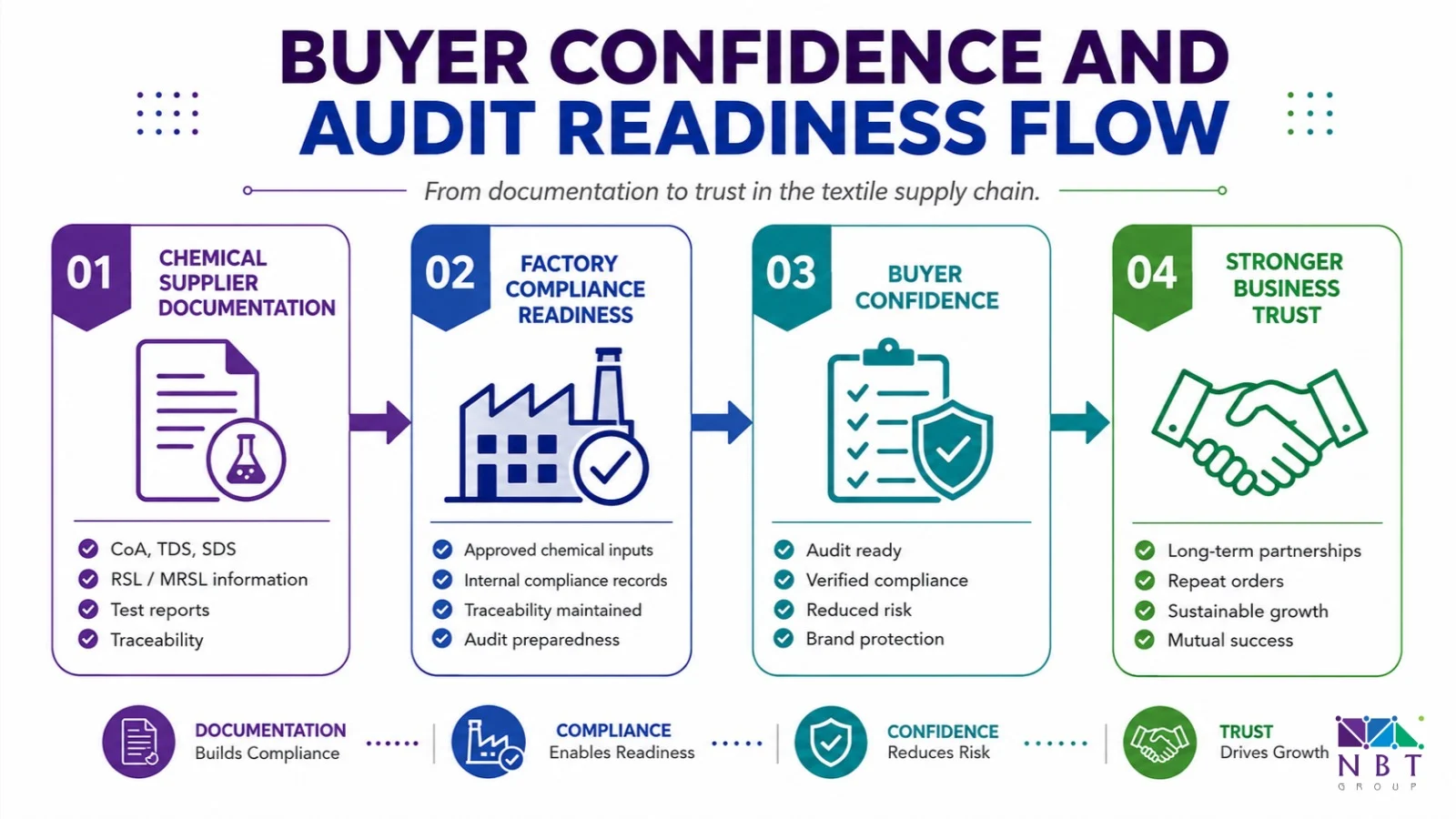
A chemical supplier is not just a product source. In today's textile market, a good supplier also supports documentation discipline, product traceability, technical clarity, and compliance-aware decision-making.
When a factory works with suppliers that maintain proper documentation and understand chemical compliance expectations, the factory becomes more confident during buyer communication. It can answer questions faster, organize records better, and show a more responsible supply chain approach.
This is where Neno Biotech Co., Limited builds practical value for textile factories. NBT's chemical support is shaped around organized product information, documentation readiness, technical communication, and responsible chemical-management awareness. For factories that work with buyers, this kind of supplier discipline helps reduce uncertainty and supports more confident business growth.
This is why the supplier selection conversation should include more than price and delivery. It should also ask: does the supplier help us stay prepared?
4. Bangladesh Market Experience: When Documentation Builds Trust
In the Bangladesh textile market, large clients increasingly evaluate chemical partners through more than product availability. They look for a supplier that can respond with clarity, maintain formal documentation, and support the factory's buyer-facing compliance expectations.
In one market experience, a large textile client's confidence was not built by a single sales promise. It was built through a practical pattern: organized product information, responsible chemical management language, document readiness, and the ability to support compliance conversations without creating confusion.
That is where Neno Biotech Co., Limited stands differently as a textile chemical partner. The company's approach gives clients a sense that chemical support is not random or informal. It is handled through systems, documentation, and a compliance-aware mindset.
For a factory, this matters. When the buyer asks about chemical input responsibility, the factory does not want uncertainty. It wants a supplier that understands the seriousness of the conversation and can support it with proper records and clear communication.
5. What ZDHC-Aware Chemical Management Looks Like in Practice
Many buyers and factories now recognize ZDHC-related chemical management as part of responsible textile production. In simple terms, it helps the industry move toward safer chemical input decisions and better visibility around chemical formulations.
For Neno Biotech, this direction is reflected in how relevant product documentation, chemical compliance records, and product-level conformance support are maintained for buyer-facing textile businesses. The aim is not to make compliance sound complicated. The aim is to help factories feel more prepared when responsible chemical input becomes part of the discussion.
A factory does not always need to explain every technical layer to every buyer. But it should work with suppliers that can maintain the right records, understand MRSL expectations, and support clear communication when required.
Practical signs of a compliance-aware chemical partner
Product documentation is organized and easy to request. NBT treats product information as part of professional chemical support.
SDS, TDS, and chemical information are handled as service essentials, helping factories stay prepared for buyer-facing questions.
Restricted-substance awareness and responsible input management are part of how NBT communicates textile chemical value.
Records, updates, and product information are kept as an organized working habit, not a last-minute audit reaction.
Clear technical communication helps factories explain chemical choices with more confidence when buyers ask for clarity.
NBT positions chemical responsibility as a normal standard of serious textile chemical partnership.
6. What Factories Should Ask Before Choosing Chemicals
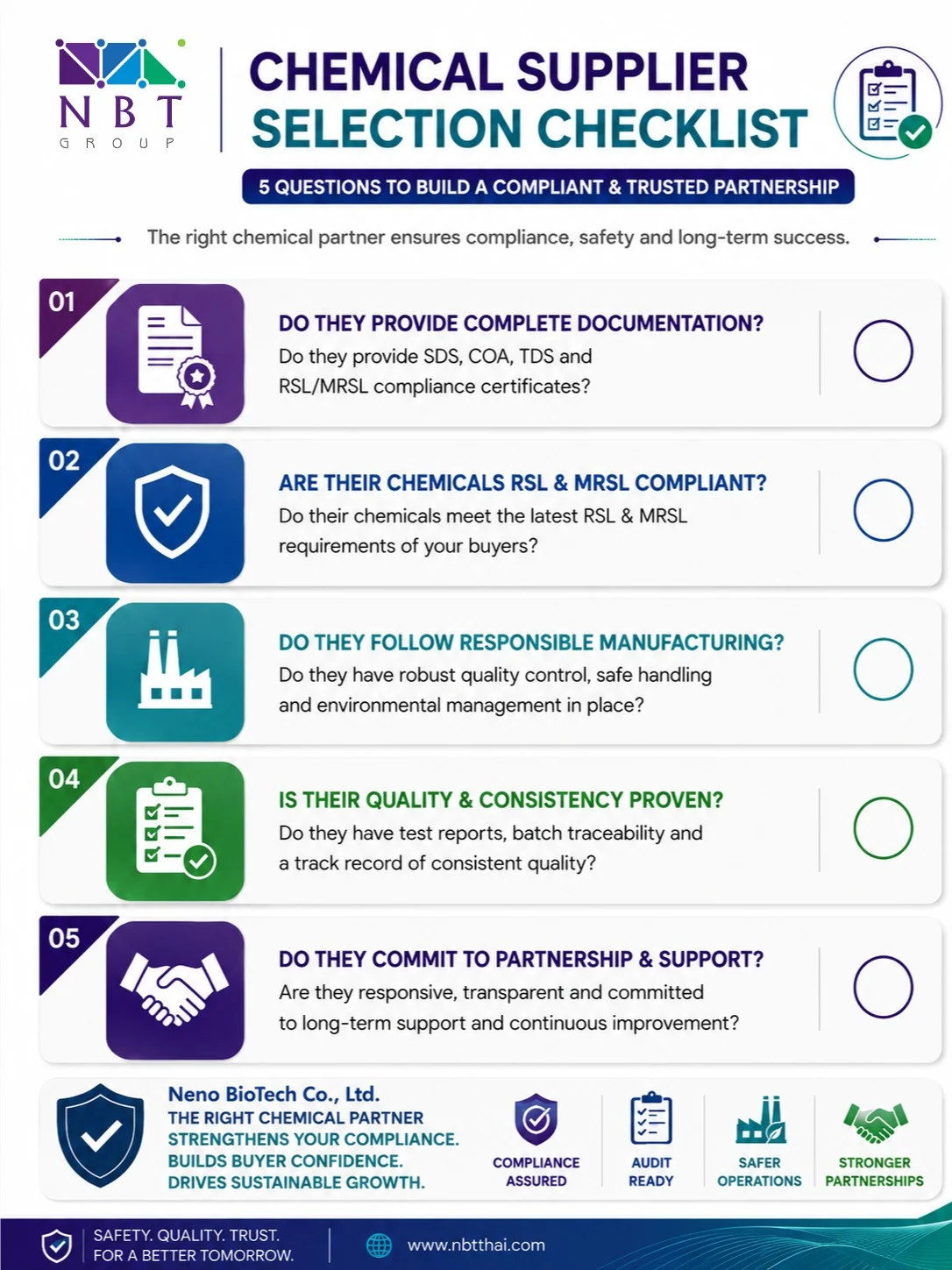
Before choosing textile chemicals, factories should ask questions that connect production performance with compliance confidence:
Does the supplier provide clear product documentation when needed?
Can the supplier support compliance-related questions from buyers or internal teams?
Does the supplier understand RSL/MRSL awareness in simple, practical language?
Is the supplier's chemical management approach organized and repeatable?
Does the product decision support long-term buyer confidence, not only immediate production needs?
Can the supplier communicate clearly when documentation or technical explanation is required?
7. Why This Matters for Students and Future Textile Professionals
For textile students and young professionals, RSL MRSL awareness is also career knowledge. The future textile specialist will not only understand machines, dyes, recipes, and production flow. They will also understand how chemical decisions connect with buyer trust, product responsibility, and modern factory credibility.
Students who learn this early will enter the industry with a stronger mindset: chemical compliance is not separate from production. It is part of how modern textile factories build credibility.
Compliance Is Not Only Paperwork
RSL MRSL awareness is not only paperwork, and it is not only a compliance department topic. It is part of how modern textile factories manage trust.
The factories that understand chemical input responsibility can communicate better with buyers, prepare better for audits, and choose suppliers with more confidence.
Neno Biotech Co., Limited supports this direction by working as a textile chemical partner that understands product performance, documentation readiness, and responsible chemical management. In a market where buyer confidence matters, this kind of organized approach becomes a business advantage.
Frequently Asked Questions
What is the difference between RSL and MRSL in textile manufacturing?
RSL focuses on restricted substances in finished textile products, while MRSL focuses on restricted substances that should not be intentionally used in manufacturing chemical inputs.
Why should textile factories care about MRSL awareness?
MRSL awareness helps factories manage chemical input responsibility, improve documentation readiness, and communicate more confidently with buyers and audit teams.
How does chemical supplier selection affect audit readiness?
A compliance-aware supplier with organized product documentation can help factories respond faster and more clearly when buyers or auditors ask about chemical inputs.
What should factories ask before choosing textile chemicals?
Factories should ask whether the supplier provides clear documentation, understands RSL/MRSL expectations, supports compliance questions, and maintains an organized chemical management approach.
How does Neno Biotech support compliance-aware textile chemical selection?
Neno Biotech supports textile factories with process-oriented chemical solutions, relevant product documentation, and responsible chemical-management awareness for buyer-facing production.
Need a compliance-aware textile chemical partner?
Neno Biotech Co., Limited supports textile factories with process-oriented auxiliary solutions, product documentation readiness, and responsible chemical-management awareness across pretreatment, dyeing, printing, finishing, and washing applications.
Contact NBTAbout Neno Biotech Co., Limited
Neno Biotech Co., Limited, also known through NBT Thai, is a textile chemical manufacturer and solution partner working across pretreatment, dyeing, printing, finishing, washing, and auxiliary chemical categories. The company focuses on process-oriented textile solutions, responsible chemical management, and compliance-aware support for modern textile factories.
Reference reading: ZDHC MRSL, ZDHC Gateway, and AFIRM Group. These references are included for student and industry learning context.