Greener Manufacturing
Greener Textile Production Starts Before the Dyeing Machine Runs
Greener textile production begins before dyeing because early chemical and process decisions shape pretreatment quality, first-time-right results, resource pressure, documentation readiness, and buyer confidence.
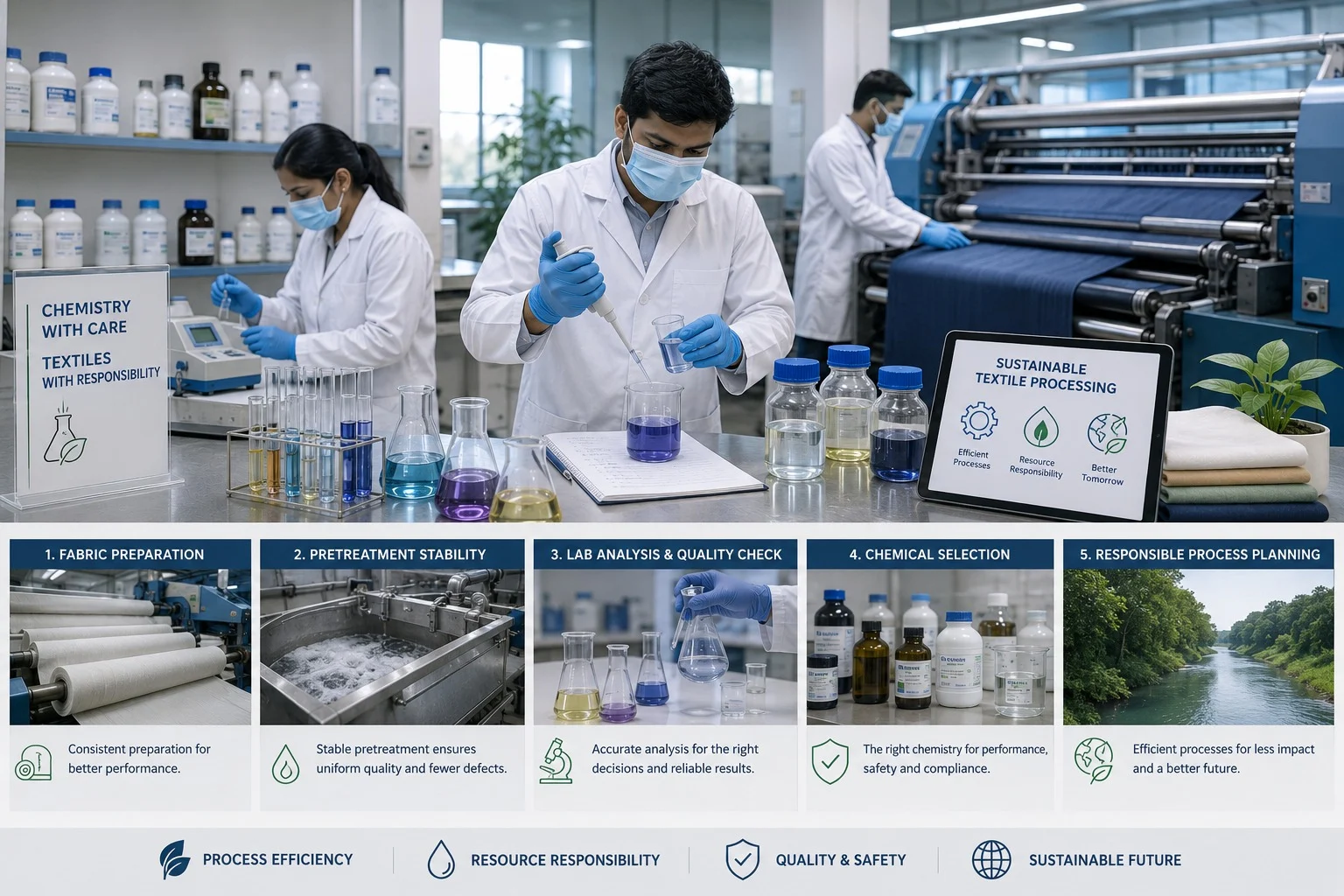
Greener textile production is often discussed at the visible end of manufacturing: water treatment, energy savings, dyeing efficiency, and final compliance checks. These areas matter. But in real production, many sustainability outcomes are influenced earlier, before the dyeing machine starts, before the shade is corrected, and before the buyer asks for documentation.
In textile manufacturing, the first responsible decisions are often made during chemical selection, pretreatment planning, and process preparation. If the fabric is not prepared properly, later stages may require more correction, more water, more energy, more time, and more technical attention.
For Neno Biotech Co., Limited, greener textile production is not only a communication theme. It is a practical way to think about how textile chemicals, auxiliary support, documentation, and technical decision-making can help factories move toward more stable and responsible manufacturing.
1. Greener Manufacturing Is Not Only a Final-Step Activity
When people hear the phrase green textile production, they often imagine advanced machinery, wastewater systems, renewable energy, or certification documents. These are valuable parts of a responsible textile ecosystem. However, greener production also depends on small technical decisions that happen much earlier in the process.
A factory may invest in better equipment, but if chemical selection is unstable or fabric preparation is inconsistent, the process can still create avoidable waste. Rework, additional washing, shade correction, poor absorbency, and unexpected production delays all increase the real impact of manufacturing.
2. Pretreatment Sets the Foundation for Better Outcomes
Pretreatment is one of the most important foundations of textile processing. It prepares fabric for dyeing, printing, finishing, or washing. If this foundation is weak, the later stages may carry that weakness forward.
Good pretreatment can support cleaner fabric preparation, better absorbency, more predictable processing, and stronger readiness for the next stage. Poor pretreatment can create hidden problems that appear later as dyeing inconsistency, process adjustment, shade variation, or repeated correction.
This is why pretreatment chemicals should not be seen only as input materials. They are process-supporting tools. When selected carefully, they help the factory protect quality, efficiency, and confidence across the full manufacturing chain.
Neno Biotech's pretreatment and textile auxiliary approach connects directly to this practical reality: greener manufacturing starts with preparation discipline, not only with final-stage claims.
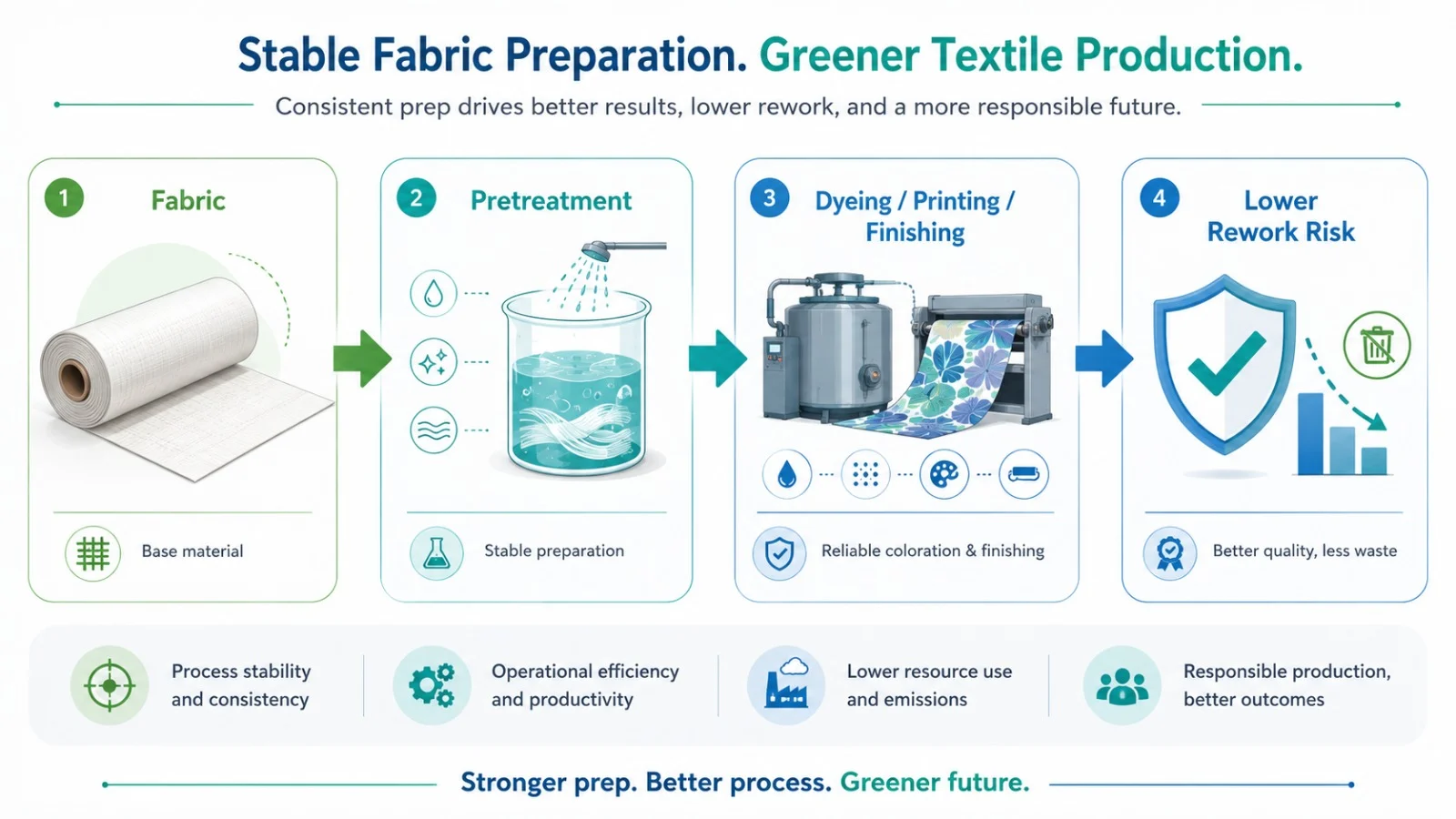
3. First-Time-Right Thinking Reduces Avoidable Waste
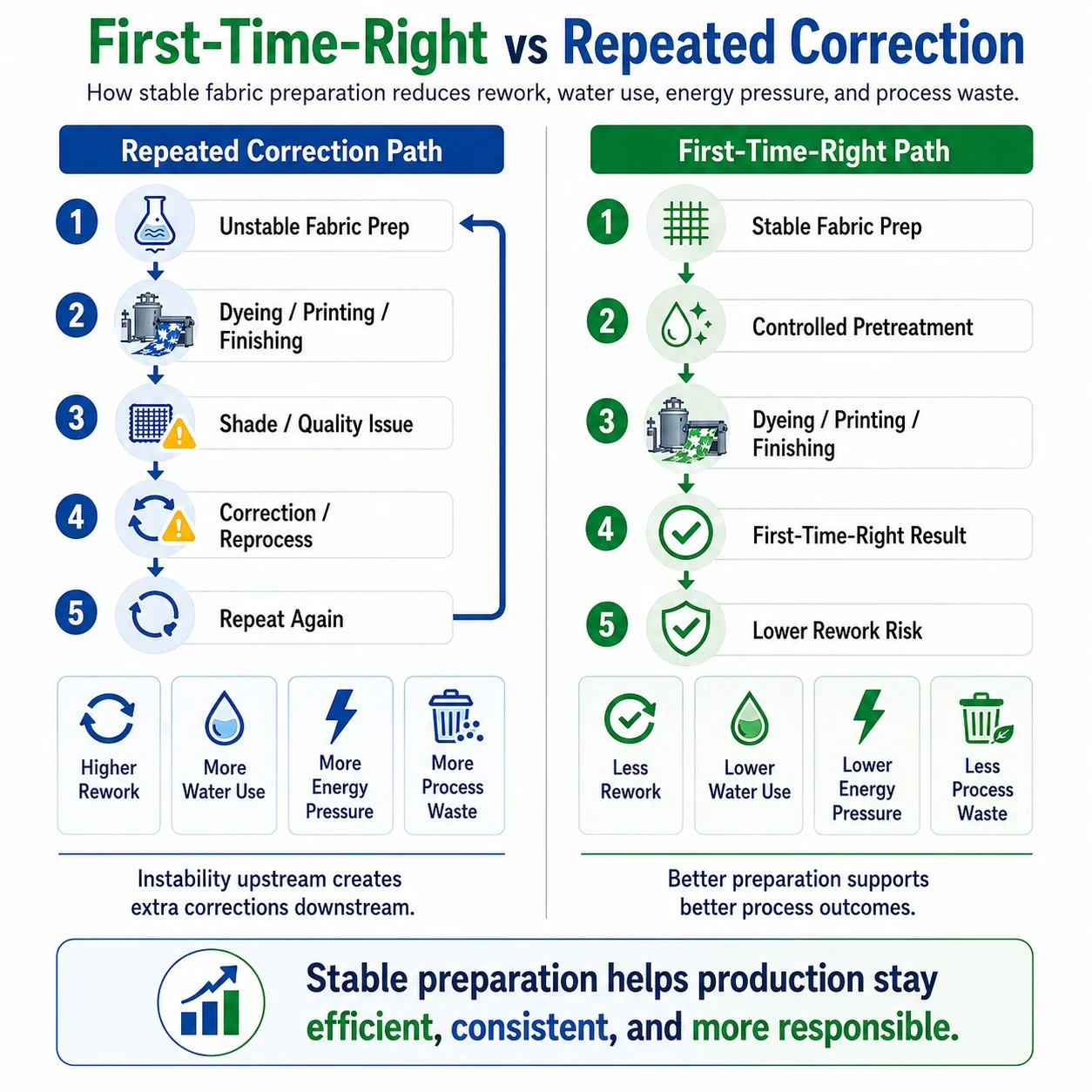
One of the strongest sustainability ideas in textile production is simple: do the process correctly as early as possible. A first-time-right mindset helps reduce repeated processing, additional chemical use, extra water consumption, more energy demand, and unnecessary production pressure.
When a process needs repeated correction, the factory does not only lose time. It also increases resource use and operational stress. In this way, technical stability becomes part of sustainability. A more stable process can support both business performance and responsible manufacturing.
For factories, the best chemical decision is not only about price. It is about how the product helps the process run predictably. For Neno Biotech, this creates a clear communication direction: responsible chemical support should help factories think beyond unit cost and consider total process value.
4. Chemical Selection Influences Compliance Confidence
Sustainability and compliance are closely connected in modern textile supply chains. Factories today face questions not only about fabric quality, but also about chemical input, documentation readiness, restricted-substance awareness, and buyer expectations.
Greener manufacturing becomes more credible when chemical decisions are supported by responsible input management. This includes maintaining relevant product documentation, understanding MRSL expectations, keeping records organized, and helping factory teams feel prepared when buyers ask compliance-related questions.
Neno Biotech works in a space where chemical supply, technical support, and compliance awareness meet. The company's role is not simply to supply textile chemicals, but to support factories with a more organized and responsible approach to chemical decision-making.
5. Greener Production Is Also a Communication Culture
Many factories are doing responsible work, but they do not always communicate it clearly. Greener manufacturing is not only about having a technical system. It is also about being able to explain the system in a way that buyers, auditors, students, and industry professionals can understand.
A supplier that can explain chemical input management, pretreatment importance, process stability, and documentation discipline in simple language becomes more than a supplier. It becomes a knowledge partner.
This is important for Bangladesh's textile market and other export-oriented production markets. As the industry grows, factories need suppliers that can support both production and perception. A factory's buyer confidence can improve when the supplier side also maintains a culture of organized technical communication.
Neno Biotech can strengthen its market presence by continuing to build this bridge: technical knowledge made clear, responsible practices made visible, and sustainability explained through real production logic.
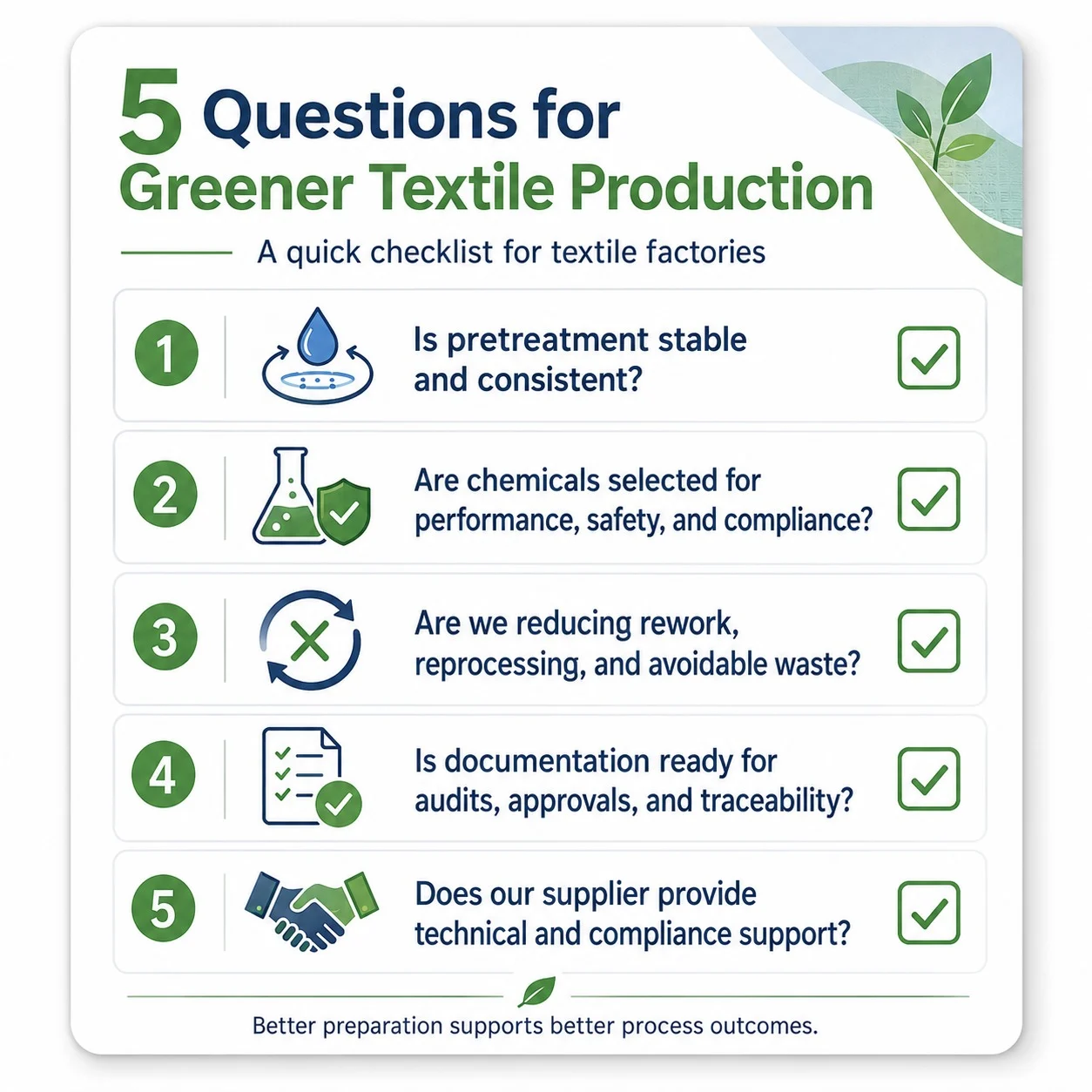
6. What Textile Factories Should Ask Before Calling a Process Greener
Before calling a process greener, factories can ask practical questions that connect sustainability with daily production decisions:
Is the fabric prepared properly before dyeing?
Does chemical selection support stable production across batches?
Are avoidable process corrections being reduced?
Is documentation ready when the buyer asks?
Does the supplier help the factory understand responsible chemical input?
Can the team explain the process clearly to buyers, auditors, or students?
These questions are operational, not theoretical. They help factory teams connect sustainability with daily decisions instead of treating it as a separate department or a final report.
Greener Manufacturing Begins With Better Decisions
Greener textile production does not start only at the dyeing machine. It begins with how a factory thinks about chemical selection, pretreatment, process discipline, documentation, and avoidable waste.
Price, performance, compliance, and sustainability should not be treated as separate conversations. In modern textile manufacturing, they are connected. A chemical choice can affect process stability. Process stability can affect resource use. Resource use can affect cost. Documentation can affect buyer confidence. And buyer confidence can affect long-term business trust.
Neno Biotech Co., Limited continues to position itself as a process-oriented textile chemical partner, supporting factories with responsible chemical thinking across pretreatment, dyeing, printing, finishing, washing, and auxiliary applications.
Frequently Asked Questions
Why does greener textile production start before dyeing?
Because fabric preparation, chemical selection, and process planning influence the amount of rework, water, energy, time, and documentation pressure that may appear later in production.
How does pretreatment affect sustainability in textile manufacturing?
Pretreatment prepares fabric for later stages. Stable pretreatment can support better absorbency, cleaner preparation, fewer process surprises, and more predictable dyeing or finishing outcomes.
What is first-time-right thinking in textile processing?
First-time-right thinking means designing the process so the desired result is achieved with fewer corrections. This can reduce avoidable rework, resource use, and production pressure.
How can textile chemical suppliers support greener manufacturing?
Suppliers can support greener manufacturing through process-oriented chemical selection, technical guidance, responsible input management, proper documentation, and compliance-aware support.
What role does Neno Biotech play in greener textile production?
Neno Biotech works as a textile chemical and solution partner across major processing categories, supporting factories with process-focused, compliance-aware, and responsible chemical management thinking.
Build greener thinking into the process early
Neno Biotech Co., Limited supports textile factories with process-oriented chemical solutions, pretreatment knowledge, documentation readiness, and responsible chemical-management awareness across major wet-processing applications.
Contact NBTAbout Neno Biotech Co., Limited
Neno Biotech Co., Limited, also known through NBT Thai, is a textile chemical manufacturer and solution partner working across pretreatment, dyeing, printing, finishing, washing, and auxiliary chemical categories. The company focuses on process-oriented textile solutions, responsible chemical management, compliance-aware support, and practical technical communication for modern textile manufacturing.
Reference reading: ZDHC MRSL, CHT Textile Solutions, Archroma Dyeing Solutions, and Google Search Central guidance on AI-assisted content. These references are included for student and industry learning context.